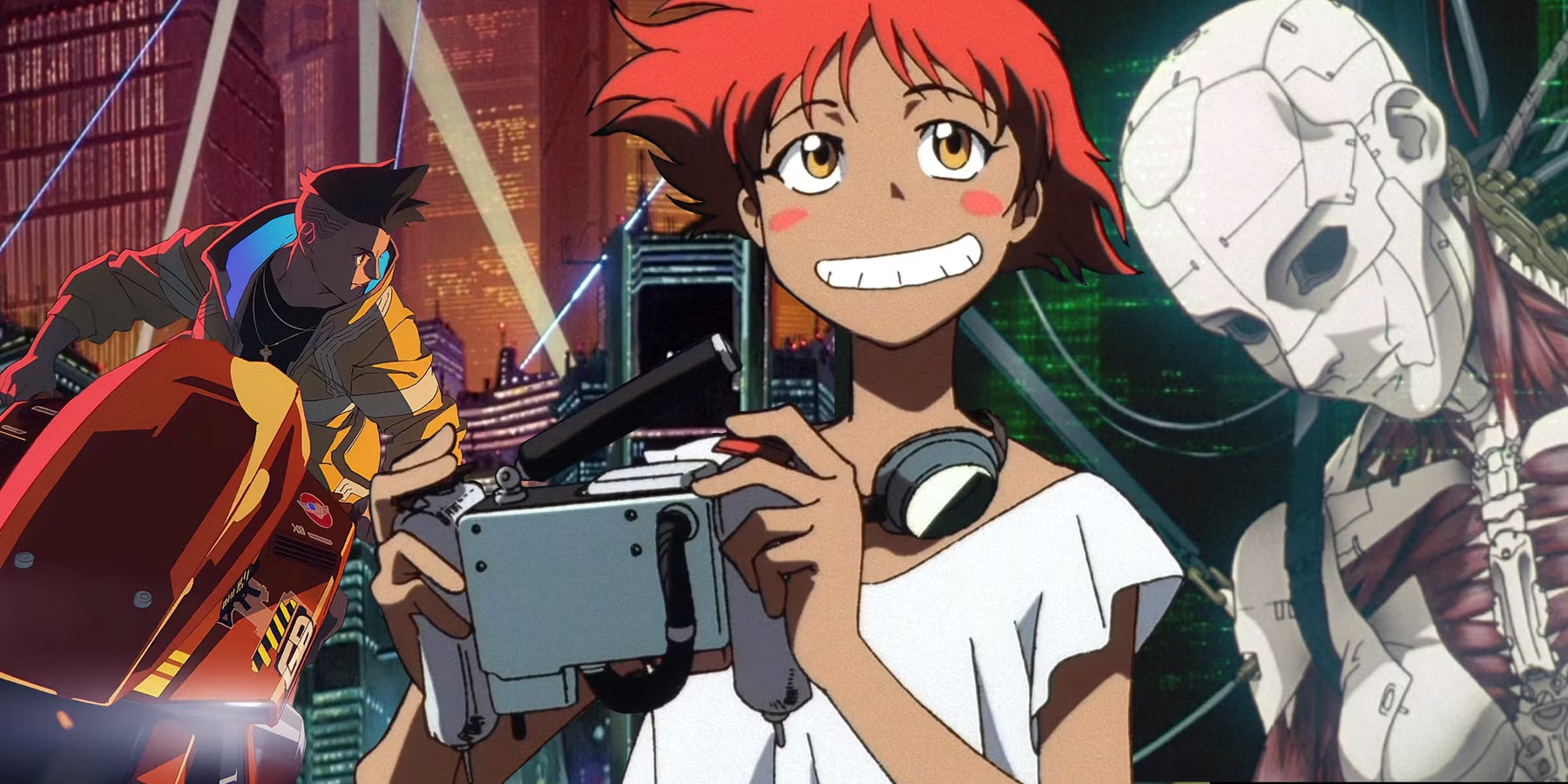
Cyberpunk Worlds in Anime Storytelling – Cyberpunk worlds in anime storytelling have carved out a powerful niche in global pop culture. From neon-lit skylines to dystopian megacities ruled by corporations, anime has transformed cyberpunk from a literary subgenre into a fully immersive visual and emotional experience. The fusion of advanced technology, social decay, identity crises, and high-octane action makes cyberpunk anime one of the most compelling storytelling landscapes in modern entertainment.
Unlike Western cyberpunk, which often leans heavily into noir and philosophical abstraction, Japanese anime tends to blend existential questions with emotional depth and character-driven arcs. This combination gives cyberpunk anime a unique storytelling rhythm that keeps audiences hooked while exploring deeper themes about humanity, technology, and survival.
The Origins of Cyberpunk in Anime
The roots of cyberpunk anime can be traced back to the 1980s, when Japanese creators began adapting and evolving ideas inspired by authors like William Gibson. However, anime didn’t just imitate Western cyberpunk—it reshaped it.
One of the earliest and most influential examples is Akira. Released in 1988 and directed by Katsuhiro Otomo, this film redefined what animated storytelling could achieve. Set in a dystopian Neo-Tokyo filled with political unrest, biker gangs, and government experiments, Akira introduced global audiences to the raw potential of cyberpunk anime.
Then came Ghost in the Shell: Stand Alone Complex, building upon the original Ghost in the Shell film and manga. It brought philosophical depth to the genre, exploring cybernetic bodies, artificial intelligence, and the blurred line between human consciousness and machine systems.
These early titles established core cyberpunk anime elements: megacities, augmented humans, corporate control, and moral ambiguity. They also laid the foundation for future series that would push the genre even further.
Key Themes in Cyberpunk Anime Worlds
Cyberpunk anime is more than futuristic visuals. At its core, it is about humanity under pressure. Technology is not just a backdrop; it is a force that reshapes society and identity.
Technology vs Humanity
One of the most recurring themes in cyberpunk anime storytelling is the tension between technological enhancement and human essence. Characters often possess cybernetic limbs, brain implants, or full synthetic bodies. But the question remains: at what point does a human stop being human?
In Ghost in the Shell, Major Motoko Kusanagi struggles with her own identity as a fully cybernetic being. The story challenges viewers to consider whether consciousness is tied to the body or something beyond physical form.
This philosophical tension gives cyberpunk anime emotional weight. It’s not just about flashy action scenes; it’s about existential doubt and self-discovery in a world dominated by machines.
Corporate Control and Social Inequality
Another defining element of cyberpunk anime worlds is corporate dominance. Governments are often weak or corrupt, while mega-corporations control infrastructure, data, and even human lives.
A strong modern example is Cyberpunk: Edgerunners, set in the universe of the video game Cyberpunk 2077. The city of Night City is controlled by powerful corporations, and ordinary people struggle to survive in a system stacked against them.
This theme resonates strongly with modern audiences. As technology companies continue to grow in real life, cyberpunk anime mirrors real-world anxieties about privacy, economic disparity, and loss of control.
Identity and Isolation
Cyberpunk cities are crowded yet lonely. Neon lights and digital billboards illuminate streets filled with strangers who rarely connect on a meaningful level. Characters often feel isolated despite being constantly connected to networks and systems.
In Serial Experiments Lain, the boundary between the real world and the digital “Wired” becomes increasingly blurred. The series dives deep into psychological and philosophical territory, examining how technology reshapes identity and social interaction.
This sense of alienation is central to cyberpunk storytelling. It reflects modern digital life, where social media and online personas can both connect and distance individuals at the same time.
Visual Aesthetics and World-Building
Cyberpunk anime storytelling is inseparable from its visual design. Neon colors, towering skyscrapers, holographic ads, rain-soaked streets, and dense urban chaos define the aesthetic. These visuals are not just stylistic choices; they reinforce the themes of excess, surveillance, and overpopulation.
The contrast between high-tech and low-life is a defining visual trope. Advanced robotics and artificial intelligence coexist with poverty and urban decay. This contrast highlights the imbalance within cyberpunk societies, where progress benefits only a select few.
World-building in cyberpunk anime is often meticulous. Cities feel alive, with layered infrastructure, underground networks, and digital overlays that shape daily life. This immersive design allows viewers to believe in the reality of these futuristic settings.
Sound design also plays a crucial role. Electronic music, industrial beats, and atmospheric synth tracks amplify the futuristic mood. Together with detailed animation, they create an experience that feels immersive rather than purely fictional.
Why Cyberpunk Anime Remains Popular
The continued popularity of cyberpunk anime is no coincidence. The genre evolves alongside technological advancement in the real world. As artificial intelligence, virtual reality, and cybernetic research become more tangible, cyberpunk stories feel less like distant science fiction and more like possible futures.
Younger audiences are drawn to the rebellious energy of cyberpunk protagonists. These characters are often hackers, mercenaries, or outcasts fighting against oppressive systems. Their struggles symbolize resistance against rigid structures, making them relatable in times of social uncertainty.
Moreover, streaming platforms have introduced classic and modern cyberpunk anime to global audiences. This accessibility has sparked renewed interest in older titles while encouraging the production of new series inspired by the same themes.
Cyberpunk anime also thrives because it blends genres. Action, thriller, mystery, romance, and psychological drama can all exist within the same cyberpunk framework. This versatility ensures that the genre never feels repetitive.
The Future of Cyberpunk Worlds in Anime
Looking ahead, cyberpunk anime storytelling is likely to grow even more complex. Emerging technologies such as neural interfaces, advanced robotics, and AI-generated environments provide fresh material for creators.
We may see more hybrid stories that combine cyberpunk with other genres like horror or space opera. Additionally, global collaboration between studios could lead to new interpretations of cyberpunk themes that blend Eastern and Western perspectives.
What will likely remain constant is the focus on humanity. Even in the most technologically saturated worlds, cyberpunk anime continues to ask deeply human questions. Who are we when machines can replicate our thoughts? What does freedom mean in a networked society? And can individuality survive in a system built for control?
These questions ensure that cyberpunk anime remains relevant, powerful, and emotionally engaging.
Conclusion
Cyberpunk worlds in anime storytelling offer more than futuristic spectacle. They present layered narratives about technology, identity, power, and survival. From classics like Akira to modern hits like Cyberpunk: Edgerunners, the genre continues to evolve while staying true to its philosophical core.
By combining immersive world-building, emotionally complex characters, and sharp social commentary, cyberpunk anime creates stories that feel both imaginative and disturbingly plausible. As technology continues to shape our real world, cyberpunk anime will likely remain one of the most compelling ways to explore what it truly means to be human in a digital age.